
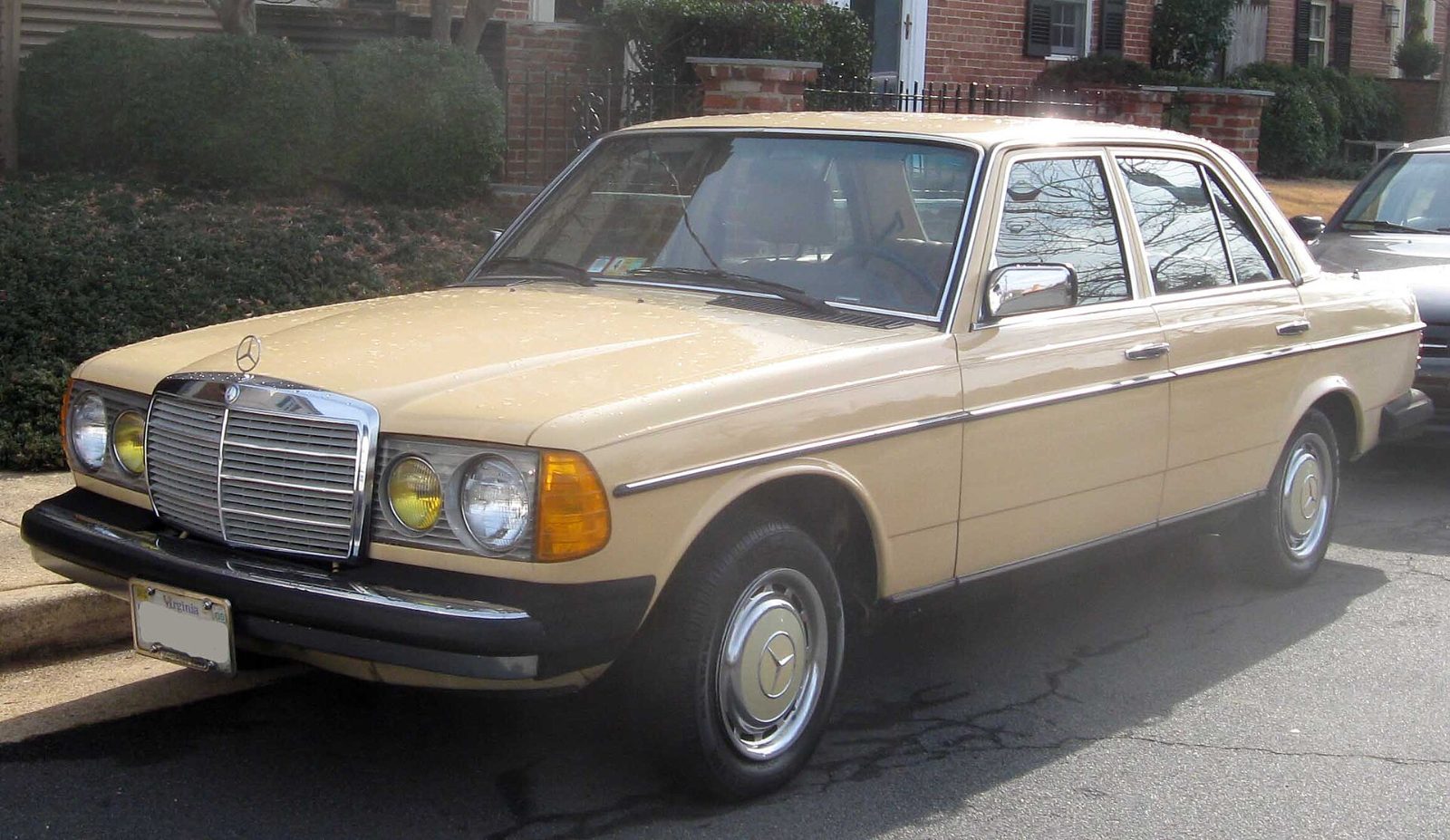
The Mercedes-Benz W123 is the mid-size Mercedes built from 1976 to 1986, the predecessor of the W124 and the ancestor of today’s E-Class. Nearly 2.7 million were made in saloon, estate, coupe and long-wheelbase form, and its reputation for durability, especially with diesel engines, made it a favourite of taxi drivers worldwide, including across the Middle East. Today it is an affordable classic, but condition varies enormously.
Why the W123 earned its reputation
The W123 combined simple, robust mechanicals with solid engineering. Its diesel engines were slow but famously long-lived, many saloons covered huge distances as taxis, and parts remain widely available. It also introduced safety features that were advanced for its time, including a strong passenger cell with crumple zones, and later in production it offered options such as ABS and a driver airbag.
For many collectors in the Gulf, the W123 has an extra layer of nostalgia: it was a common sight on regional roads in the 1980s and 1990s.
Body styles
| Body | Code | Notes |
|---|---|---|
| Saloon | W123 | By far the most common |
| Estate | S123 | Mercedes’ first factory-built estate, known as the T-Model |
| Coupe | C123 | Shorter wheelbase, pillarless side windows |
| Long-wheelbase | V123 | Seven or eight-seat saloon, often used as taxis or limousines |
Ambulances, hearses and other special versions were also built on the platform by coachbuilders.
Engines
The W123 offered a wide range of four-, five- and six-cylinder engines.
- Diesels: the 200 D, 220 D, 240 D and five-cylinder 300 D are the classic choices. A turbocharged five-cylinder appeared in some markets later, notably in the estate and in North America. They are slow by modern standards but extremely durable when maintained.
- Petrol four-cylinders: 200, 230 and later 230 E with fuel injection.
- Petrol sixes: the 250 and the twin-cam 280 and 280 E, the most powerful W123 models, with the fuel-injected 280 E at the top.
Most W123s have a four-speed automatic or manual gearbox, with a five-speed manual available in some markets.
What makes a good W123 buy
- Solid, rust-free structure matters more than mileage.
- Diesels are simple and tolerant of high mileage if serviced.
- The 280 E is the most desirable for performance; the 300 D for durability.
- Coupes and estates usually command a premium over saloons.
Common problem areas
Rust
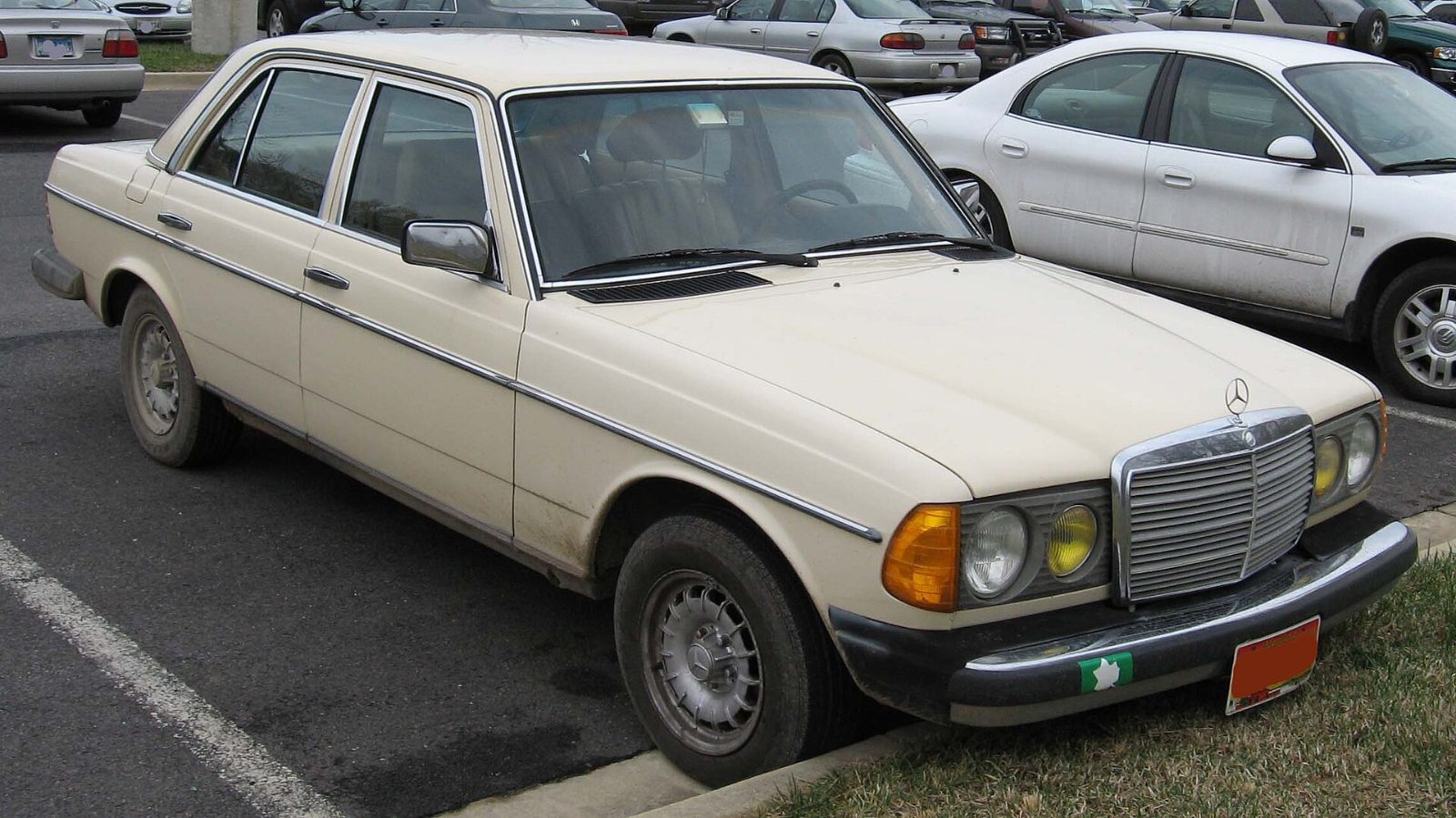
Even cars that spent their lives in the dry Gulf climate may have been imported from humid or salted-road countries. Check:
- Front and rear wheel arches and the edges of the sills
- Jacking points and floor pans
- The area around the windscreen and rear window seals
- The battery tray and the front valance
- The bottoms of the doors and the boot floor
Vacuum and electrical systems
The central locking on many W123s works using vacuum, and diesels also use vacuum to shut off the engine. Cracked vacuum lines cause doors that do not lock or engines that will not switch off. Original wiring and switches can also suffer after 40 years.
Climate control and cooling
Cars with automatic climate control use a servo unit that is a known weak point. In the UAE, air conditioning matters, so test it thoroughly on a hot day. Check the radiator, viscous fan coupling and hoses; many classic overheating problems come from tired cooling components.
Heat and old rubber
Summer temperatures in the Gulf age rubber seals, engine mounts, bushings and hoses quickly. A W123 that has been parked outside for years may need a lot of rubber replaced even if it looks clean. Factor this into your budget.
Buying a W123 in the UAE
- Documents: confirm ownership and registration. For imported cars, check customs papers and whether the car can be registered and pass inspection in your emirate. Rules for classic vehicles vary, so check with the RTA in Dubai or the relevant authority.
- VIN and data card: confirm the model and original equipment. Our VIN guide explains older VIN formats.
- Structure: inspect underneath on a lift if possible.
- Engine: diesels should start without excessive smoke after glow plugs have warmed; petrol engines should idle smoothly.
- Transmission: automatic shifts should be smooth and not slip.
- Interior: original MB-Tex vinyl seats are durable; cracked dashboards are common in sunny climates.
With a W123, buy the best body you can afford. Mechanical parts are easier and cheaper to sort than rust.
Living with one
A well-maintained W123 can be driven regularly, but expect it to feel slow and soft compared with modern cars, and plan for modern safety limitations. Many owners in the UAE use theirs for weekend drives and club meets. Covered parking, regular use and an owner-friendly independent mechanic who knows older Mercedes models make ownership much easier.
Parts availability is generally good, with genuine parts still produced for many components through Mercedes-Benz Classic and a large aftermarket.
W123 vs W124
The W124 replaced the W123 in 1985 and brought better aerodynamics, more modern safety and more complex engineering. The W123 is simpler and easier to maintain; the W124 is more comfortable and faster. To compare them and other classic models, see our Model Line Finder.
FAQ
How long can a W123 diesel last?
With regular oil changes and maintenance, W123 diesels are known for exceptionally high mileages. Condition and history matter more than the odometer.
Is the W123 a good first classic car?
Yes, for many buyers. It is simple, well documented and well supported by parts suppliers. Buy a solid car and budget for rubber and cooling parts.
Which W123 is the most valuable?
Generally, well-kept coupes, estates and the 280 E, plus rare long-wheelbase versions, are valued highest. Condition and originality drive prices.
Can a W123 handle UAE summers?
It can, if the cooling system and air conditioning are in good condition. Avoid long idling in peak heat and use covered parking.
Sources: Mercedes-Benz Classic, Mercedes-Benz Group, Mercedes-Benz Club of America
Cover photo: Wikimedia Commons contributor, CC BY-SA 3.0. Last reviewed: 2026-11-25.