
The Mercedes-Benz S-Class is the brand’s flagship saloon, and since the 1972 W116 it has gone through seven generations, each known by an internal chassis code. If you are reading a listing in Dubai or Abu Dhabi, that code tells you more about the car than the model year alone, so this guide walks through every generation and what it brought.
Why the chassis code matters more than the badge
Mercedes reuses badges such as S500 or S580 across generations, and engines change underneath them. A 1995 S500 and a 2022 S580 share a role but almost nothing mechanically. Dealers, parts suppliers and independent workshops in the UAE all speak in chassis codes, so learning them makes a parts quote, a service history or an import record far easier to read.
You can confirm the code from the VIN. Our guide to reading a Mercedes VIN shows which characters to look at, and the Model Line Finder places each code next to its siblings.
Quick orientation
- Seven generations carry the S-Class name, starting with the W116.
- “W” codes mark saloons; long-wheelbase versions often appear as V codes.
- Coupe versions were split off and later sold separately, first as the CL and then as the S-Class Coupe.
The seven generations at a glance
| Chassis | Approx. years | What it is remembered for |
|---|---|---|
| W116 | 1972 to 1980 | First car officially named S-Class; offered with ABS from 1978 |
| W126 | 1979 to 1991 | Very long production run; driver airbag introduced |
| W140 | 1991 to 1998 | Heavy, over-engineered build; double glazing and soft-close doors |
| W220 | 1998 to 2005 | Lighter design, Airmatic air suspension, early adaptive cruise |
| W221 | 2005 to 2013 | Night View assist, more electronics, hybrid arrives late in life |
| W222 | 2013 to 2020 | Magic Body Control, Maybach version returns, plug-in hybrid |
| W223 | 2020 onward | Rear-axle steering, large MBUX screens, Level 3 system in some markets |
Dates overlap because production of one generation often ran alongside the launch of the next, and markets received cars at different times.
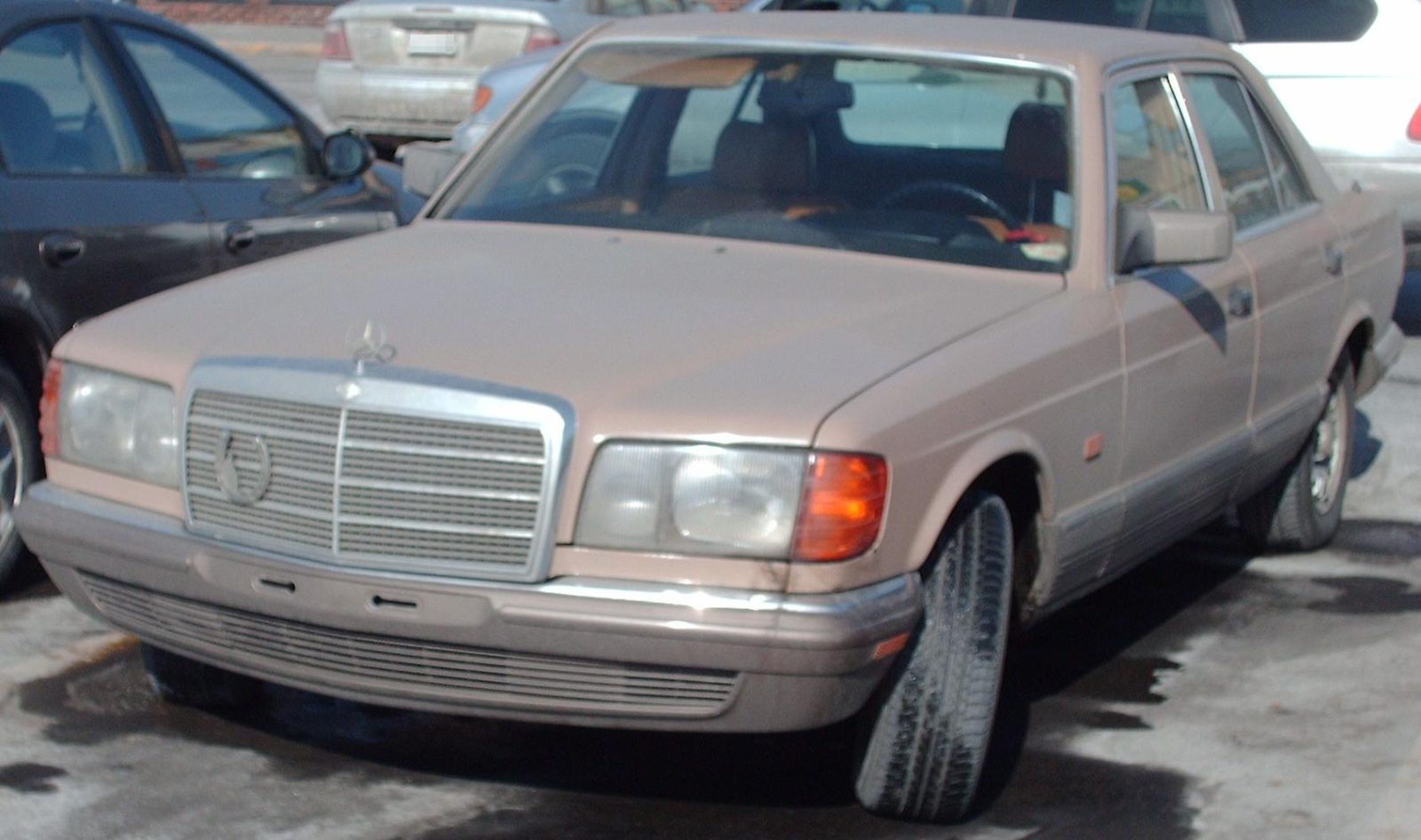
W116 and W126: the foundations
The W116 set the template: a large, safe, quiet saloon built for long distances at speed. Its most important legacy is the anti-lock braking system developed with Bosch, which became available on this model in 1978 and later spread across the industry.
The W126 refined that idea and stayed in production for more than a decade. It introduced the driver airbag to the range and gained a strong reputation for durability. In the Gulf, surviving W126 cars are now treated as classics, and well-kept examples with documented history are prized by collectors. Heat is the main enemy of these older cars: rubber seals, vacuum lines for the central locking and interior plastics all age faster under strong sun.
W140: the heavyweight
The W140 was larger and heavier than anything before it, and it carried a long list of comfort features for its era, including double-glazed side windows and soft-close doors. It also offered a V12. Owners love the build quality; mechanics point out that the wiring and electronic modules of this period can be costly to diagnose. Buyers in the UAE should check air conditioning performance carefully, since a weak system in July is more than an inconvenience.
W220 and W221: the electronic era
The W220 cut weight and size and introduced Airmatic air suspension as standard on many versions, along with early radar-based adaptive cruise control. Air suspension struts and compressors are wear items, and the pattern of failure on older Airmatic cars is well known in independent workshops.
The W221 brought a cleaner design and more driver-assistance technology, including an infrared night vision system. Later in its life a mild hybrid version arrived. Today it is one of the more affordable ways into a large Mercedes, but electronics and suspension remain the areas to inspect first.
Older air suspension in hot climates
On W220 and W221 cars, listen for the compressor running for a long time after start-up, check whether the car sits level after standing overnight, and ask for any history of strut or compressor replacement. Heat and dust speed up wear on rubber air springs.
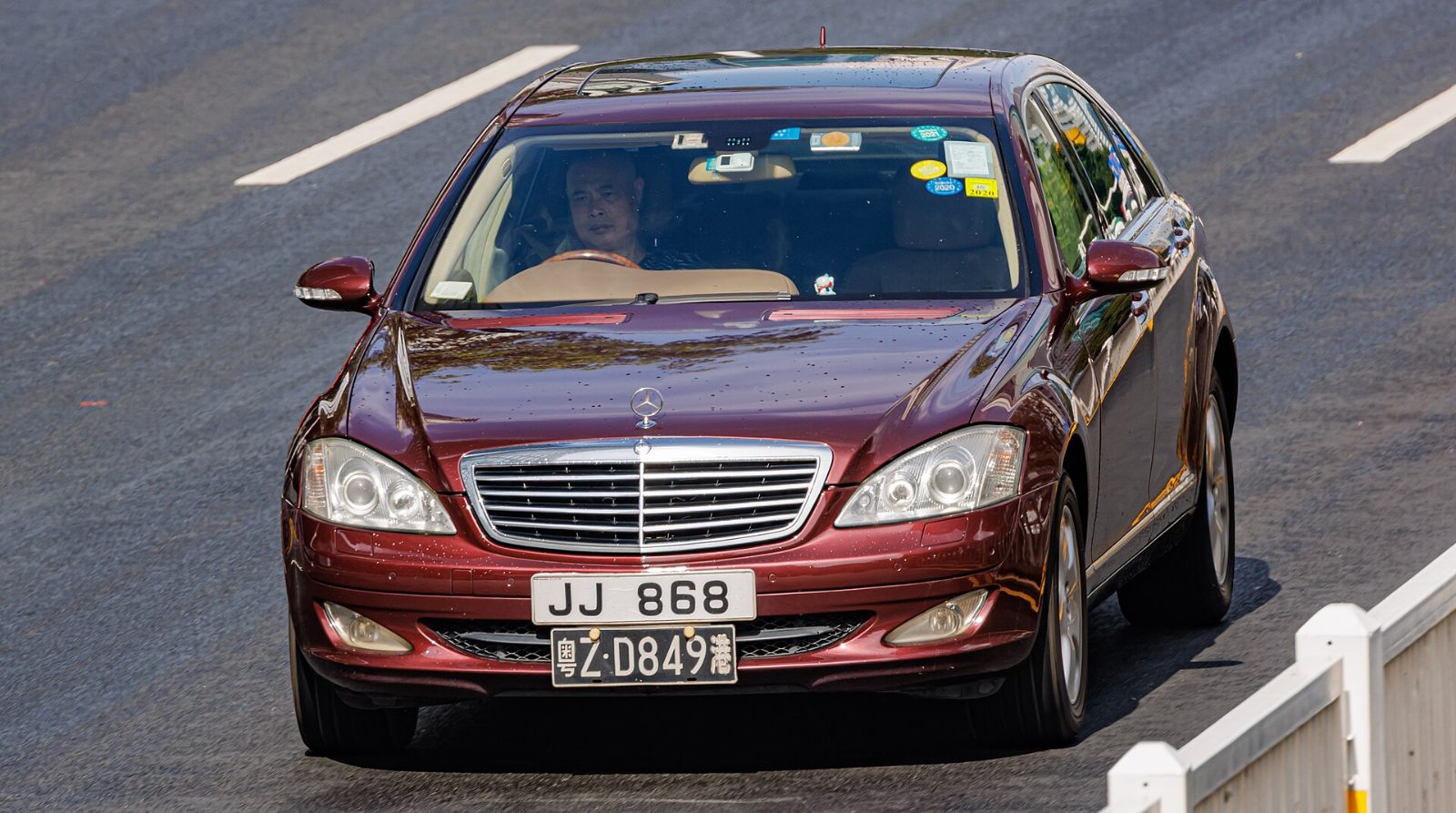
W222: the modern benchmark
The W222 is the generation most often seen on UAE roads in the used market today. It introduced Magic Body Control, a system that uses a stereo camera to scan the road surface and prepare the suspension for bumps. The range broadened considerably: plug-in hybrid versions, AMG models, a coupe and cabriolet on a separate line, and the return of the Maybach name as an extended-wheelbase S-Class.
A mid-life update around 2017 brought new engines, including a straight-six and an updated V8, along with revised driver-assistance systems. When comparing two W222 cars, check whether a car is pre- or post-update, because equipment and engines differ.
In an S-Class listing, the chassis code and service history tell you far more than the model year or the badge on the boot.
W223: the current S-Class
The W223, launched in 2020, focuses on interior technology and comfort. Large central and driver displays run the MBUX system, rear-axle steering is available and makes the long car noticeably more manoeuvrable in tight car parks, and some markets have approval for a conditionally automated driving system at low speeds. Availability of each feature depends on market and specification, so confirm what a particular UAE-spec car actually has rather than relying on brochure lists from other regions.
Maybach versions continue on this platform. For current specifications, the official Mercedes-Benz website for the UAE is the reference point.
GCC-spec or import?
Many S-Class cars sold in the UAE were supplied new through the official distributors and are described as GCC-spec. These usually have cooling and air-conditioning components chosen for the climate and a service history at authorised workshops. Imported cars can be perfectly good, but check:
- Whether the car has a clean registration history and passes RTA or the relevant emirate’s inspection.
- Whether parts and software updates for that market version are supported locally.
- Whether any accident or flood history is recorded.
Before you view a car
Decode the VIN first, confirm the generation and engine, then ask the seller for the service book. If those three do not agree with the advert, walk away.
Which generation suits which buyer?
For a daily driver with modern safety systems, a late W222 or a W223 makes the most sense. For a lower purchase price with higher maintenance risk, the W221 is the usual choice. For a weekend classic, the W126 has the strongest following, while the W116 is rarer and more of a collector’s car. Whatever you choose, budget for an independent pre-purchase inspection at a workshop familiar with the specific generation.
FAQ
How do I know which S-Class generation a car is?
Check the chassis code through the VIN or the vehicle data card. A specialist workshop or an authorised dealer can also confirm it from the VIN.
Is a Maybach a separate model from the S-Class?
In recent generations the Mercedes-Maybach saloon is based on the S-Class with a longer wheelbase and extra luxury equipment, sold under the Maybach name.
Which S-Class generations are considered classics?
The W116 and W126 are widely treated as classics, and the W140 is gaining interest. Condition and documentation matter more than age.
Are older S-Class models hard to maintain in the UAE heat?
They need more attention to cooling, air conditioning, seals and electronics. Regular inspection and covered parking help a lot.
Sources: Mercedes-Benz, Mercedes-Benz Group, Mercedes-Benz Club of America
Cover photo: Dinkun Chen, CC BY-SA 4.0. Last reviewed: 2026-11-25.