
Mercedes-AMG is the performance division of Mercedes-Benz, based in Affalterbach, Germany. It began in 1967 as an independent engineering firm, became a Mercedes partner in the 1990s and is now fully owned by the group. Today the AMG name appears on everything from styling packages to hand-built V8 supercars, so understanding the tiers helps you know exactly what you are buying.
Where the name comes from
AMG was founded by two former Mercedes engineers, Hans Werner Aufrecht and Erhard Melcher. The letters stand for Aufrecht, Melcher and Grossaspach, Aufrecht’s home town. The company started by developing racing engines and tuning Mercedes cars.
An early success came in 1971, when an AMG-modified 300 SEL 6.8 saloon, nicknamed the “Red Pig”, finished second overall and won its class at the Spa 24 Hours race, a remarkable result for a large luxury saloon.
From tuner to Mercedes division
| Period | Milestone |
|---|---|
| 1967 | AMG founded as an independent engineering company |
| 1971 | 300 SEL 6.8 AMG’s class win at the Spa 24 Hours |
| 1990 | Cooperation agreement with Daimler-Benz; AMG models sold through Mercedes dealers |
| 1993 | First jointly developed model, the C 36 AMG |
| 1999 | Majority ownership passes to the Mercedes parent company |
| 2005 | Full ownership by the Mercedes parent company |
| 2010s onward | Own sports cars, such as the SLS AMG and AMG GT, plus the AMG ONE hypercar |
Today the brand is officially Mercedes-AMG, and AMG models are sold alongside Mercedes-Benz cars at authorised dealers, including in the UAE.
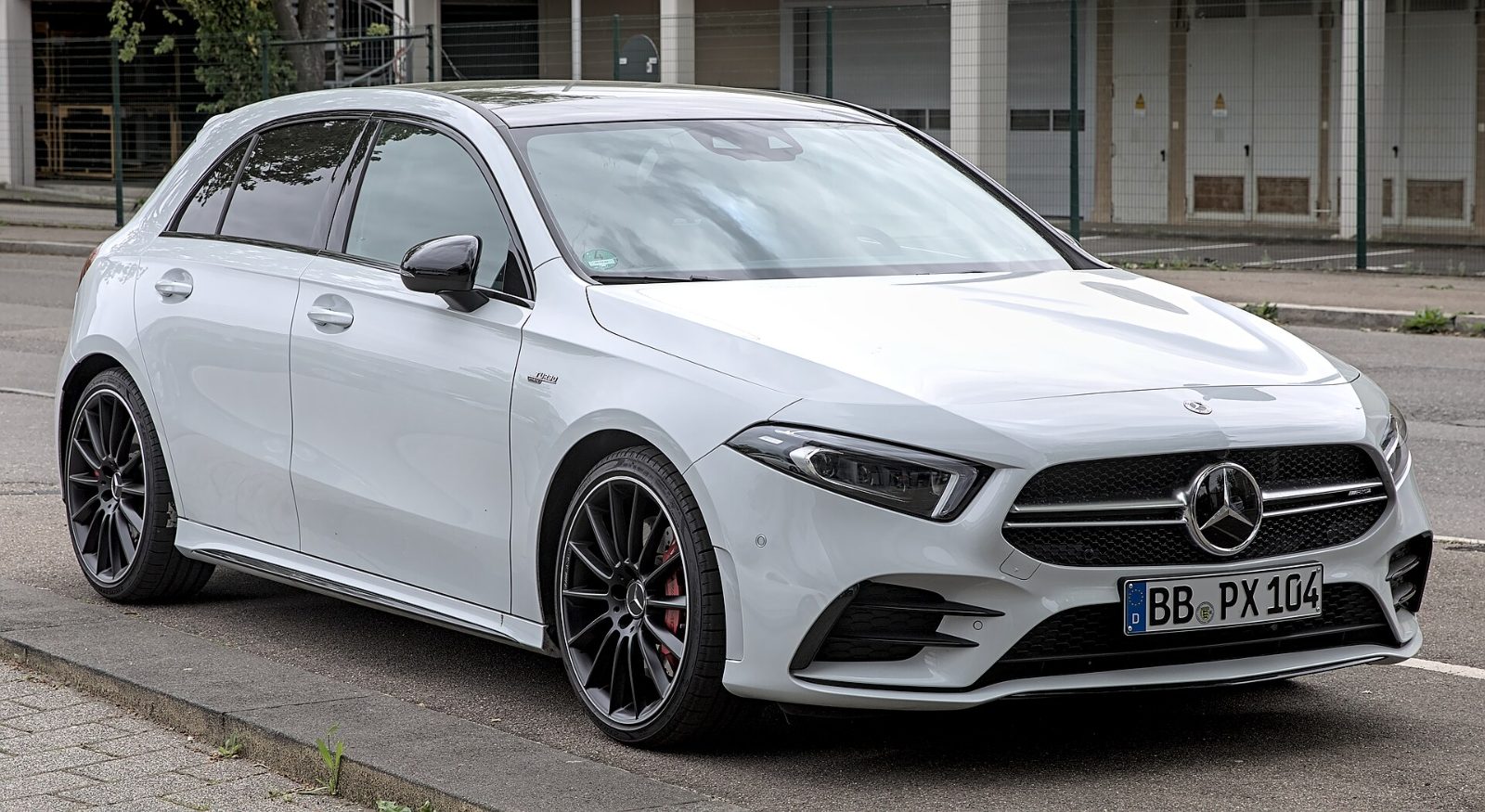
“One man, one engine”
AMG’s top engines are hand-assembled in Affalterbach by a single technician from start to finish, who then signs a plaque on the engine. This principle applies to specific engines such as the four-cylinder in the 45 models and many V8s in the 63 models; it does not apply to every AMG-badged car. If the signed plaque matters to you, check which engine your chosen model uses.
Understanding the tiers
The AMG name now covers three main levels.
AMG levels in plain terms
- AMG Line: a styling and equipment package on a regular Mercedes. Sportier bumpers, wheels and interior details; standard engines.
- AMG performance models (35, 43, 53 and similar): genuine AMG-tuned cars with more power, revised suspension and brakes, often based on engines shared with Mercedes-Benz.
- Full AMG models (45, 63 and AMG-specific cars): the top tier, with AMG-developed engines, stronger hardware and the most performance.
Model numbers no longer correspond directly to engine size. A “63” today does not mean a 6.3-litre engine; it signals the top performance level in that range. Engines and outputs also change with each generation, and some recent models use hybrid systems.
Cars AMG builds on its own
Most AMG models are based on Mercedes-Benz cars, but a few are developed largely by AMG itself. The SLS AMG of 2010 was the first car developed entirely by AMG, with gullwing doors that nodded to the 300 SL. It was followed by the AMG GT sports car and the AMG GT four-door coupe, which have their own body designs rather than being versions of a Mercedes-Benz model. At the very top sits the Mercedes-AMG ONE, a limited-production hypercar using a hybrid powertrain derived from Formula One technology.
AMG also develops the performance versions of the G-Class, and the Mercedes-AMG G 63 has become one of the most familiar AMG models on UAE roads. In recent years AMG has added electrified models too, including plug-in hybrid versions of some 63 models and performance versions of Mercedes electric cars. The badge now spans a much wider range of technologies than the naturally aspirated V8s that made its name.
AMG in the UAE
AMG cars are popular across the Gulf, and the UAE has an active owner community with track days at circuits such as the Dubai Autodrome and Yas Marina. Before buying, consider:
- Insurance: premiums for AMG models are generally higher than for equivalent Mercedes-Benz versions; get quotes first.
- Tyres and brakes: performance tyres and large brakes cost more and wear faster, and tyres age quickly in strong sun.
- Heat: high-output engines put extra load on cooling systems in traffic. Follow the service schedule and correct oil specification.
- Specification: GCC-spec cars from official distributors usually come with regional support; imported cars should be checked for parts and software compatibility.
Modified AMG cars
Many AMG cars on the used market have been remapped or fitted with aftermarket exhausts. These changes can affect warranty, insurance and, in some cases, legality for road use. Ask directly and check documents before buying.
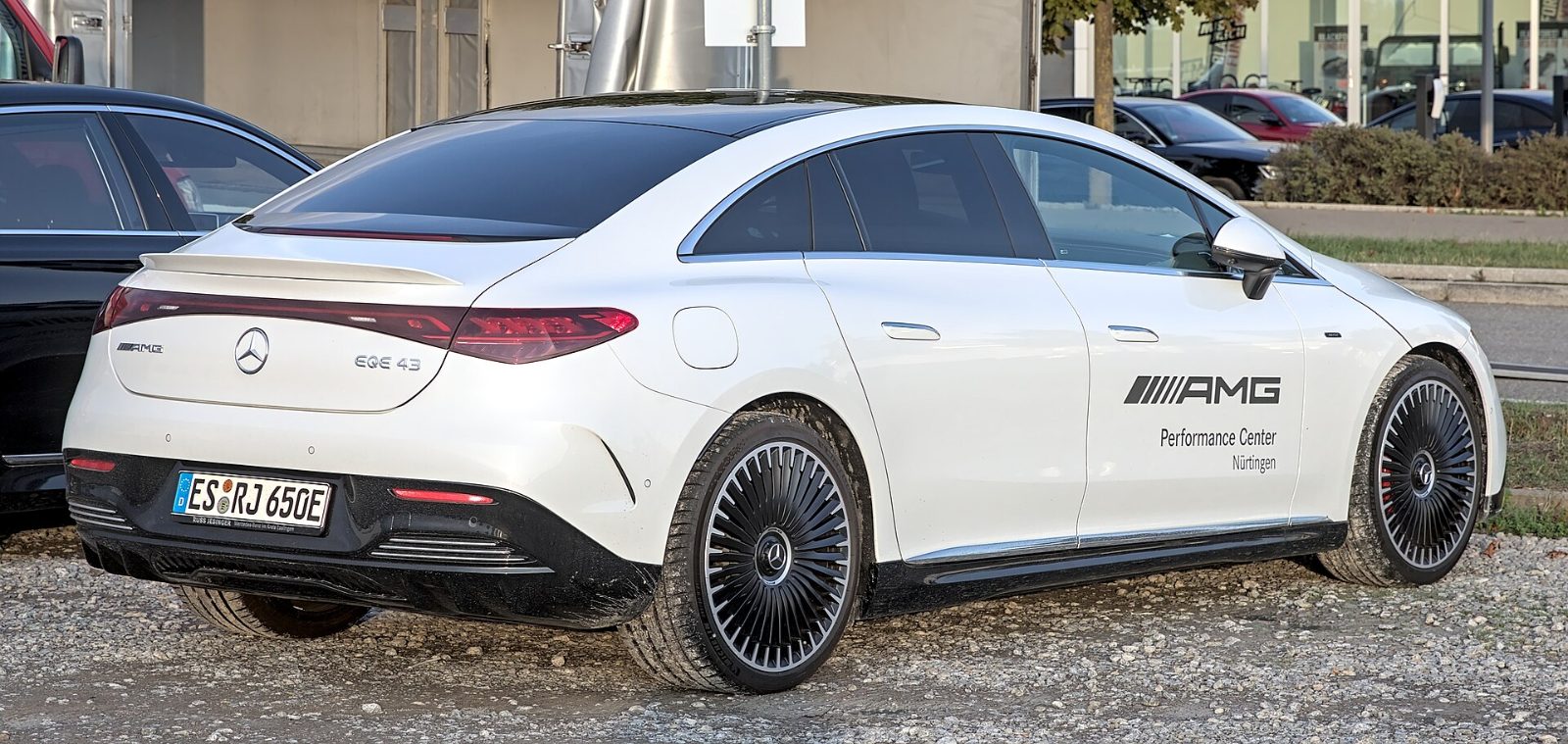
Choosing between AMG levels
- Looks and comfort: AMG Line gives the visual style with lower running costs.
- Everyday performance: 35, 43 or 53 models offer strong acceleration and sharper handling while remaining comfortable.
- Maximum performance: 45 and 63 models deliver the full AMG experience at higher purchase and running costs.
Test-drive more than one level if you can. Many buyers find that a mid-level model gives most of the enjoyment for daily driving in city traffic.
AMG on the boot can mean a styling package or a hand-built engine. Check the full model name.
Buying a used AMG
- Decode the VIN to confirm the exact model and engine. Our VIN guide shows how.
- Ask for full service history from authorised or AMG-experienced workshops.
- Inspect tyres, brakes and suspension for signs of hard use or track days.
- Scan for stored fault codes and check for software modifications.
- Confirm remaining warranty or service contract coverage.
For model-specific guides, see our pages on the G63, C63 and CLA 45, or compare ranges in the Model Line Finder.
FAQ
What does AMG stand for?
Aufrecht, Melcher and Grossaspach: the two founders’ surnames and Aufrecht’s home town.
Is an AMG Line car a real AMG?
No. AMG Line is a styling and equipment package. Performance AMG models carry names such as C 43 or C 63.
Are all AMG engines hand-built?
No. The “one man, one engine” principle applies to specific top-tier engines. Many AMG models use engines built on regular production lines with AMG tuning.
Does the number 63 mean a 6.3-litre engine?
Not anymore. It indicates the performance level rather than engine size.
Sources: Mercedes-AMG, Mercedes-Benz Group, Mercedes-Benz
Cover photo: Alexander Migl, CC BY-SA 4.0. Last reviewed: 2026-11-25.