
Mercedes-Benz brake pads usually need replacing when the “Check brake pad wear” message appears, when you hear grinding or squealing, or when a workshop measures them below the minimum thickness at a service. Most Mercedes models have electronic wear sensors that trigger the warning, and these sensors are normally replaced along with the pads. Discs often need replacing at the same time, especially on cars driven hard or in heavy traffic.
How Mercedes warns you
Most modern Mercedes cars have a small wear sensor clipped into at least one brake pad on an axle. When the pad wears down to a set level, the sensor makes contact with the disc and its circuit is broken, which triggers a message in the instrument cluster such as “Check brake pad wear” or a similar warning.
At that point there is usually some pad material left, but you should book a replacement soon. Once the sensor has been activated it is damaged and must be replaced, which is why invoices usually list both pads and a sensor.
Signs you need new pads
| Sign | What it may mean |
|---|---|
| Brake pad wear message | Pads have reached the sensor limit |
| High-pitched squeal when braking | Pads may be worn or glazed, or dust has built up |
| Grinding or scraping noise | Pads may be worn to the metal; stop driving if severe |
| Vibration through the pedal or steering | Discs may be uneven or worn |
| Longer stopping distances | Worn pads, overheated brakes or fluid issues |
| Car pulls to one side when braking | Sticking caliper or uneven pad wear |
Grinding brakes are urgent
A metal-on-metal grinding sound means the pad material may be gone. This rapidly damages the discs and reduces braking performance. Have the car inspected immediately and avoid unnecessary driving.
Pads and discs: why they often go together
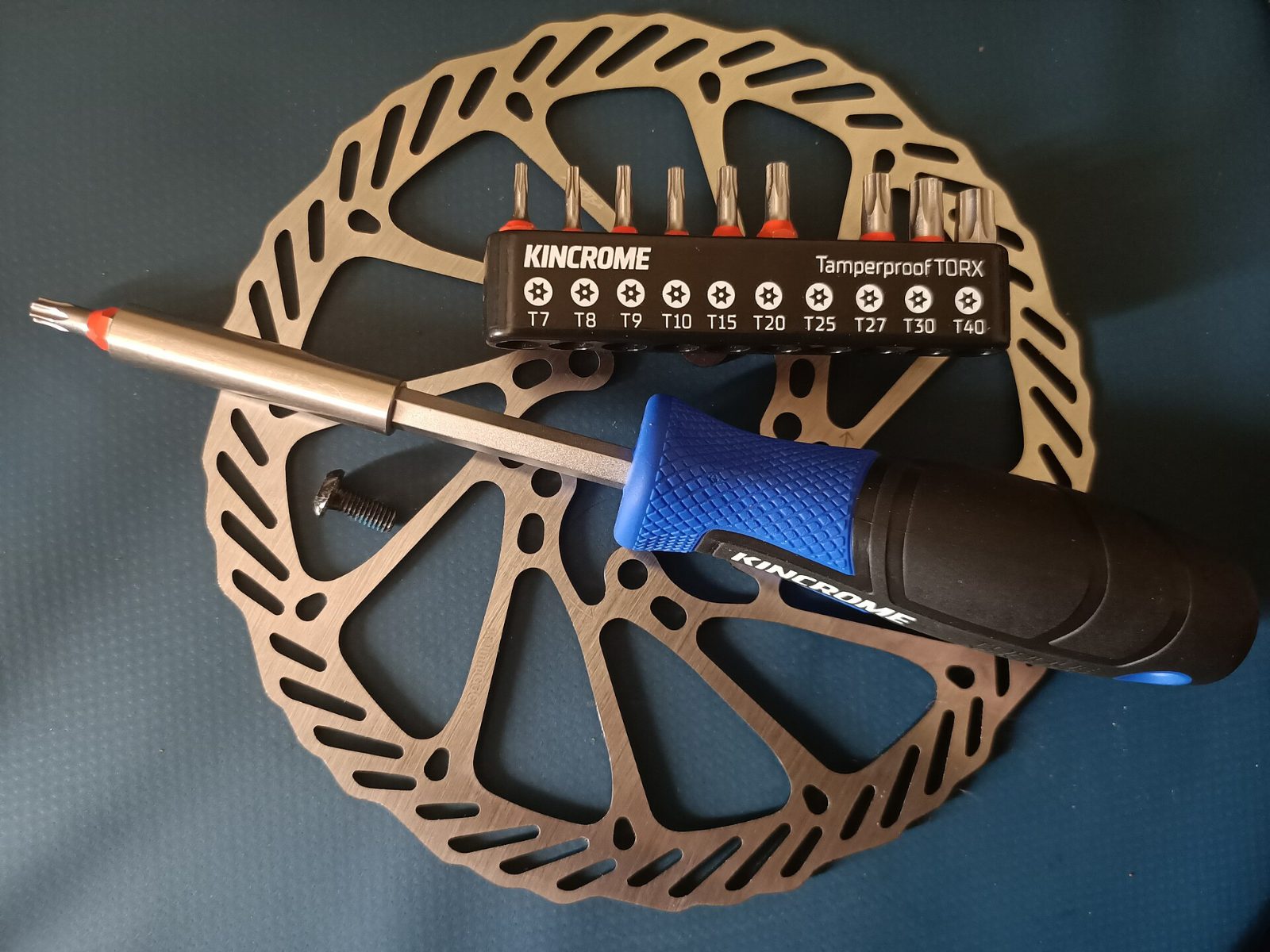
Mercedes discs wear along with the pads. Each disc has a minimum thickness, usually stamped on the disc, and workshops measure it at each brake job. If discs are below the limit, scored, cracked or uneven, they must be replaced. Many workshops recommend replacing discs with every second set of pads, but it depends on measurement, not a fixed rule.
Always replace pads in axle sets, both sides together, so braking stays balanced.
Electronic parking brakes
Many recent Mercedes models have an electronic parking brake built into the rear calipers. Replacing rear pads on these cars requires putting the parking brake into a service or maintenance mode, either through a diagnostic tool or a procedure described in the service information, so the pistons can be retracted safely. Forcing them back without this can damage the mechanism. This is one reason rear pad replacement is best left to a workshop familiar with the model.
Brake fluid matters too
Brake fluid absorbs moisture over time, which lowers its boiling point. In the UAE heat, and especially during long downhill drives such as on Jebel Jais or Jebel Hafeet, hot brakes can boil old fluid, causing a soft pedal. Mercedes typically recommends changing brake fluid every two years; your service booklet confirms the interval for your car.
Brake dust and pad choices
Original Mercedes pads are designed for strong, consistent braking and tend to produce a fair amount of dark dust on the wheels. Some owners choose aftermarket pads marketed as low-dust. If you consider them:
- Choose a reputable brand with pads specified for your exact model.
- Accept that braking feel and wear rate may differ from original pads.
- Make sure the pads are compatible with your wear sensors.
- For AMG and high-performance models, stay with pads designed for the car’s performance.
UAE driving habits that save brakes
- Leave space in heavy traffic so you can brake gently and early.
- On long descents, use a lower gear or the transmission’s manual mode to let engine braking help.
- Wash wheels regularly; sand and brake dust baked on by heat can corrode wheel finishes.
- Have brakes checked before long summer road trips.
What the job involves
- The car is raised and wheels removed.
- Pads, discs, calipers, sensors and hoses are inspected and measured.
- Old pads and the wear sensor are removed; on electronic parking brake cars, service mode is activated first.
- Discs are replaced if needed, and hub surfaces are cleaned.
- New pads and sensors are fitted, with any specified anti-squeal treatment.
- The parking brake is returned to normal mode and calibrated where required.
- Pads are bedded in with a road test.
Bedding in new brakes
New pads and discs need a period of gentle use to bed in properly. For the first few hundred kilometres, avoid hard braking where possible and let the brakes cool between stops. Your workshop may give specific advice.
Replace pads in pairs, measure discs every time, and do not ignore the wear warning.
Costs
Costs vary by model, front or rear axle, disc replacement, parts brand and workshop. AMG brakes and carbon-ceramic discs are much more expensive than standard parts. Ask for a written quote listing pads, discs, sensors and labour separately. To confirm the exact model before ordering parts, decode the VIN with our VIN guide, and for general maintenance guidance see our guide to Service A vs Service B.
FAQ
How long do Mercedes brake pads last?
It depends on model, driving style and traffic. Heavy city driving wears them faster than highway driving. The wear sensor and service inspections tell you when they are due.
Do I need to replace the wear sensor?
Usually yes, once it has triggered the warning. It is a small, inexpensive part.
Can I replace only the front pads?
Yes, front and rear wear at different rates. Replace both sides of the same axle together.
Why are my Mercedes wheels so dusty?
Original pads produce noticeable dust. Low-dust aftermarket pads exist, but braking feel and wear can differ.
Sources: Mercedes-Benz, Mercedes-Benz USA, NHTSA
Cover photo: Wikimedia Commons contributor, CC BY-SA 3.0. Last reviewed: 2026-11-25.