
The Mercedes-Benz 300 SL Gullwing is the W198 sports coupe built from 1954 to 1957, famous for doors hinged in the roof that open upward like a gull’s wings. It grew out of a successful racing car, was one of the fastest production cars of its day, and was the first production car with petrol direct fuel injection. Only about 1,400 coupes were made, and it is now one of the most celebrated and valuable classic cars in the world.
From race track to showroom
In 1952, Mercedes-Benz returned to motorsport with the W194 300 SL racing car. It won major events that year, including the 24 Hours of Le Mans and the Carrera Panamericana in Mexico. Its lightweight tubular spaceframe chassis gave it strength without excess weight.
Max Hoffman, the influential importer of European cars into the United States, believed there was a market for a road-going version among wealthy American enthusiasts. He pushed Mercedes to build it, and the production 300 SL made its debut in New York in 1954.
Why it has gullwing doors
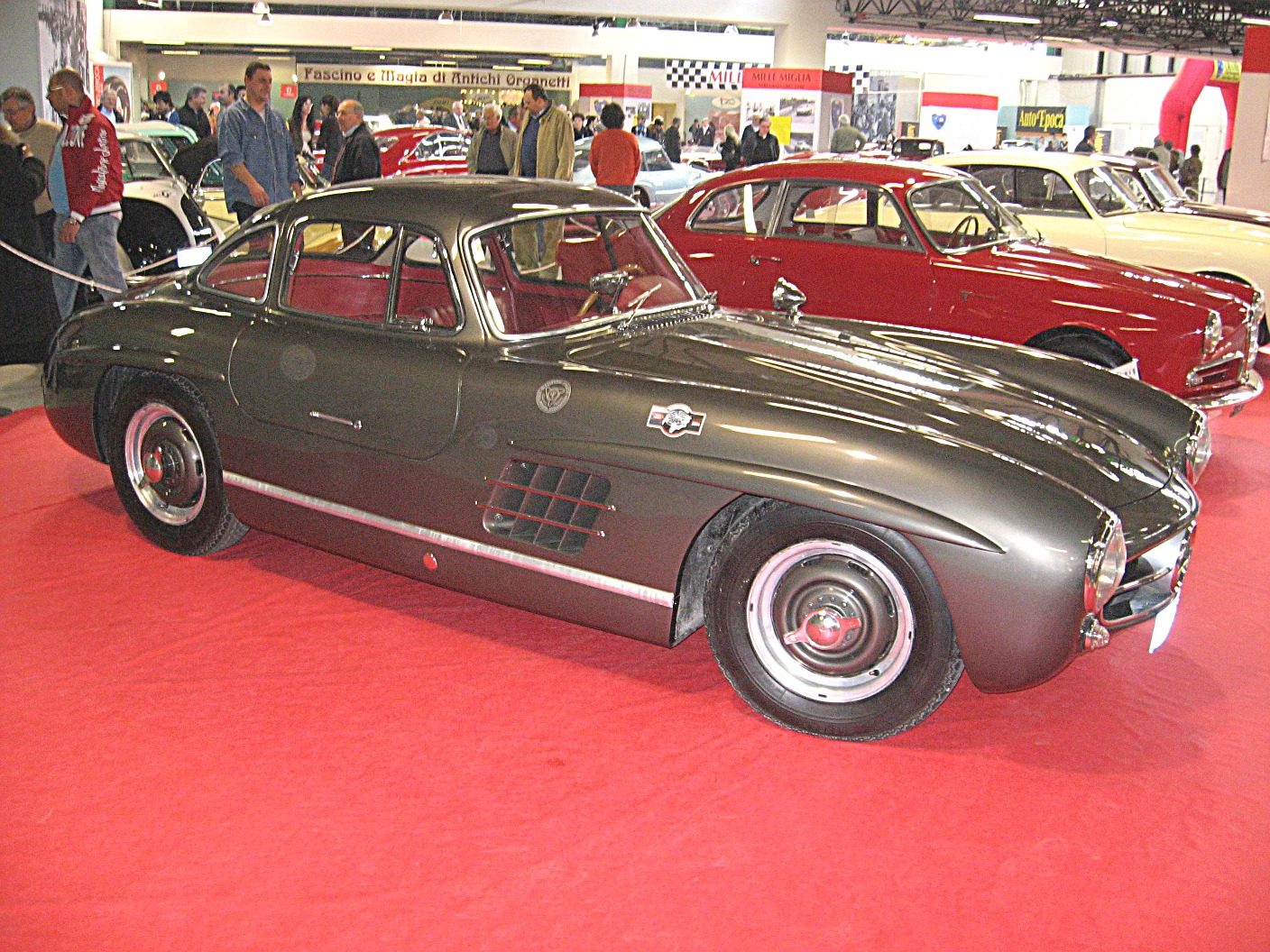
The doors were not just a styling choice. The spaceframe chassis ran high along the sides of the car to keep it stiff, leaving no room for conventional doors. Hinging the doors in the roof was the engineering solution. Getting in still means stepping over a wide, high sill, and many cars have a steering wheel that tilts to make entry easier.
300 SL in brief
- Chassis code W198, built as a coupe from 1954 to 1957
- About 1,400 Gullwing coupes produced
- 3.0-litre straight-six, tilted to fit under the low bonnet
- First production car with petrol direct fuel injection, developed with Bosch
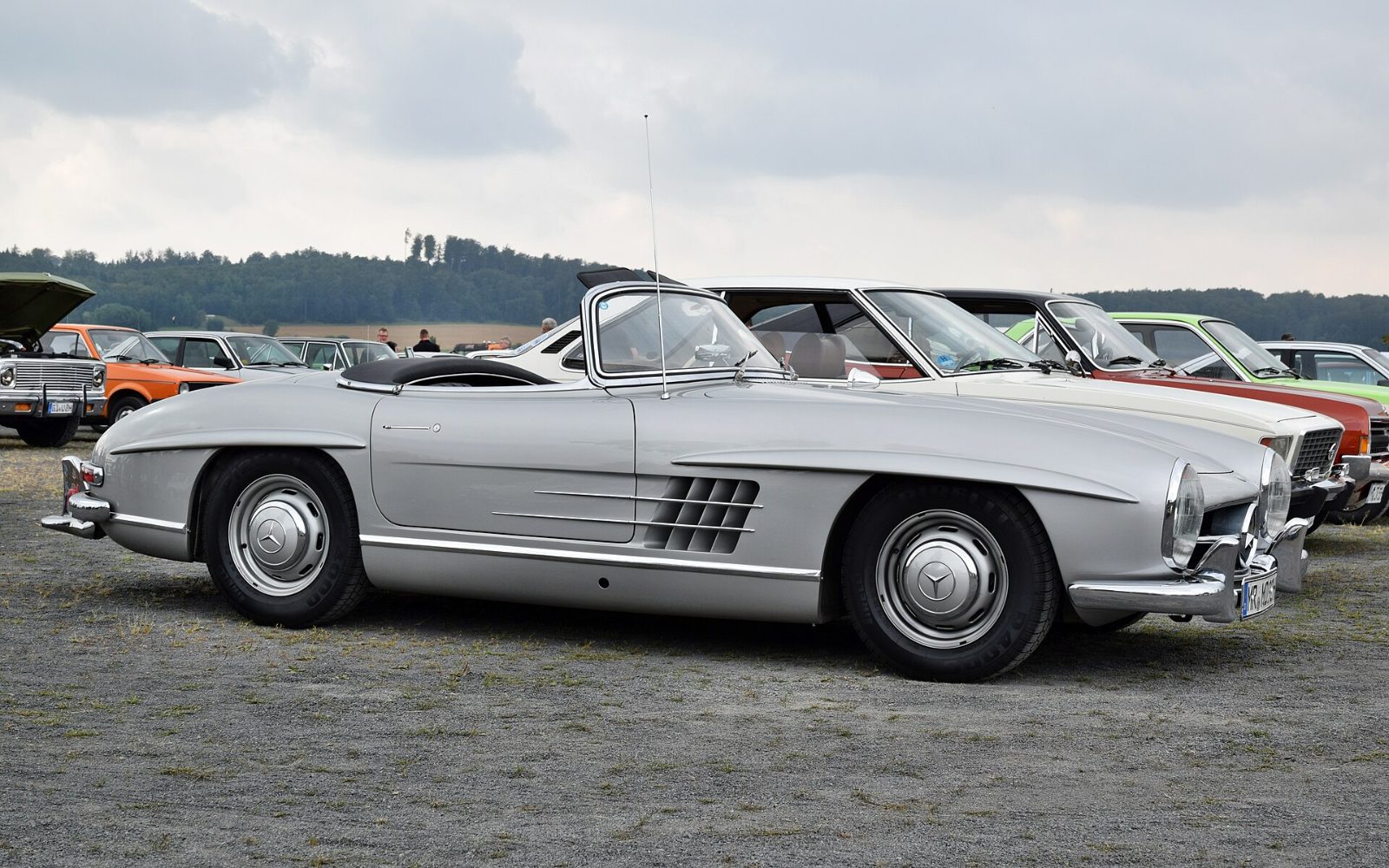
- Followed by the 300 SL Roadster from 1957 to 1963
The engine and performance
The 300 SL used a 3.0-litre straight-six engine derived from Mercedes saloon engines but heavily modified. Mechanical direct fuel injection allowed it to produce much more power than carburettor versions. The engine was mounted at a steep angle so the bonnet could stay low, which is why there are two small bulges on the bonnet.
With the right rear axle ratio, the car was capable of very high speeds for the 1950s, making it one of the fastest production cars of its time. Brakes were large drums, and the rear used a swing-axle suspension that demanded respect at the limit.
A small number of coupes were built with lightweight aluminium bodies, and these are among the most sought after of all.
Gullwing vs Roadster
| Years | 1954 to 1957 | 1957 to 1963 |
|---|---|---|
| Doors | Roof-hinged gullwing doors | Conventional doors |
| Chassis | Spaceframe with high sills | Modified spaceframe with lower sills |
| Rear suspension | Swing axle | Revised low-pivot swing axle |
| Brakes | Drums | Drums, later discs |
| Production | About 1,400 | About 1,850 |
The Roadster is more practical and easier to get into, and it handles more predictably thanks to the revised rear axle. The Gullwing is the more iconic shape and generally the more valuable.
Driving a 300 SL today
Owners describe the Gullwing as surprisingly usable once you are inside, with a supple ride for its era and strong, smooth power from the straight-six. Cabin heat is the most common complaint: the engine and exhaust run close to the occupants, and the fixed side windows on most coupes do not wind down. Some cars were fitted with removable side windows, and owners in hot climates often limit drives to cooler mornings and winter months.
Mechanical fuel injection needs a specialist to set up correctly, and the cars dislike long periods of standing. Fuel quality and the condition of fuel lines matter, as does a healthy cooling system. Getting the best from a 300 SL means driving it regularly and gently warming it up, rather than leaving it parked for months between outings.
The smaller 190 SL
At the same time, Mercedes sold the 190 SL, a smaller and much less expensive roadster that resembled the 300 SL but used a four-cylinder engine and a conventional platform. It is a lovely classic in its own right, but buyers should not confuse it with the 300 SL.
Collecting a 300 SL
The 300 SL market is specialist territory. Values are high, and so is the importance of provenance.
Points that matter most
- Matching numbers: original chassis, engine and body numbers documented.
- History: a continuous ownership and restoration record.
- Restoration quality: work by recognised specialists, ideally with photo records.
- Authenticity: originality of key components, including the fuel injection system.
- Certification: Mercedes-Benz Classic offers services that can help verify a car’s background.
Always use an independent specialist to inspect a car before purchase, and be wary of incomplete paperwork.
Ownership in the UAE
The UAE has an active classic car community, collector garages and car shows where 300 SLs occasionally appear. Ownership in the Gulf needs care:
- Store the car in a climate-controlled garage. Heat and humidity damage leather, wood, rubber and wiring.
- Exercise the car regularly in cooler months to keep seals and the fuel system healthy.
- Use a battery maintainer, as heat shortens battery life.
- Work with a specialist familiar with the 300 SL’s mechanical fuel injection.
If importing a classic car into the UAE, check customs requirements and registration rules for older vehicles with the relevant authority in your emirate, such as the RTA in Dubai.
The 300 SL is defined by its engineering. The doors exist because the chassis needed them.
Its place in Mercedes history
The Gullwing inspired the gullwing doors of the SLS AMG in 2010 and remains a reference point for Mercedes design. The SL name it began continues to this day, and the 300 SL is widely regarded as one of the most important sports cars ever built. To explore how the SL family evolved, see our guide to the SL and our Model Line Finder. For decoding chassis numbers of later classics, our VIN guide is a useful starting point.
FAQ
How many 300 SL Gullwings were made?
About 1,400 coupes were built between 1954 and 1957.
Why does the 300 SL have gullwing doors?
Its tubular spaceframe chassis had high side sills, so conventional doors were not possible. Roof-hinged doors solved the problem.
What does SL stand for?
It is generally read as Super Leicht, German for super light, although Mercedes has also used Sport Leicht.
Is the 300 SL Roadster as valuable as the Gullwing?
Roadsters are also highly valued, but Gullwing coupes generally command higher prices.
Sources: Mercedes-Benz, Mercedes-Benz Group, Mercedes-Benz Club of America
Cover photo: Ermell, CC BY-SA 4.0. Last reviewed: 2026-11-25.