
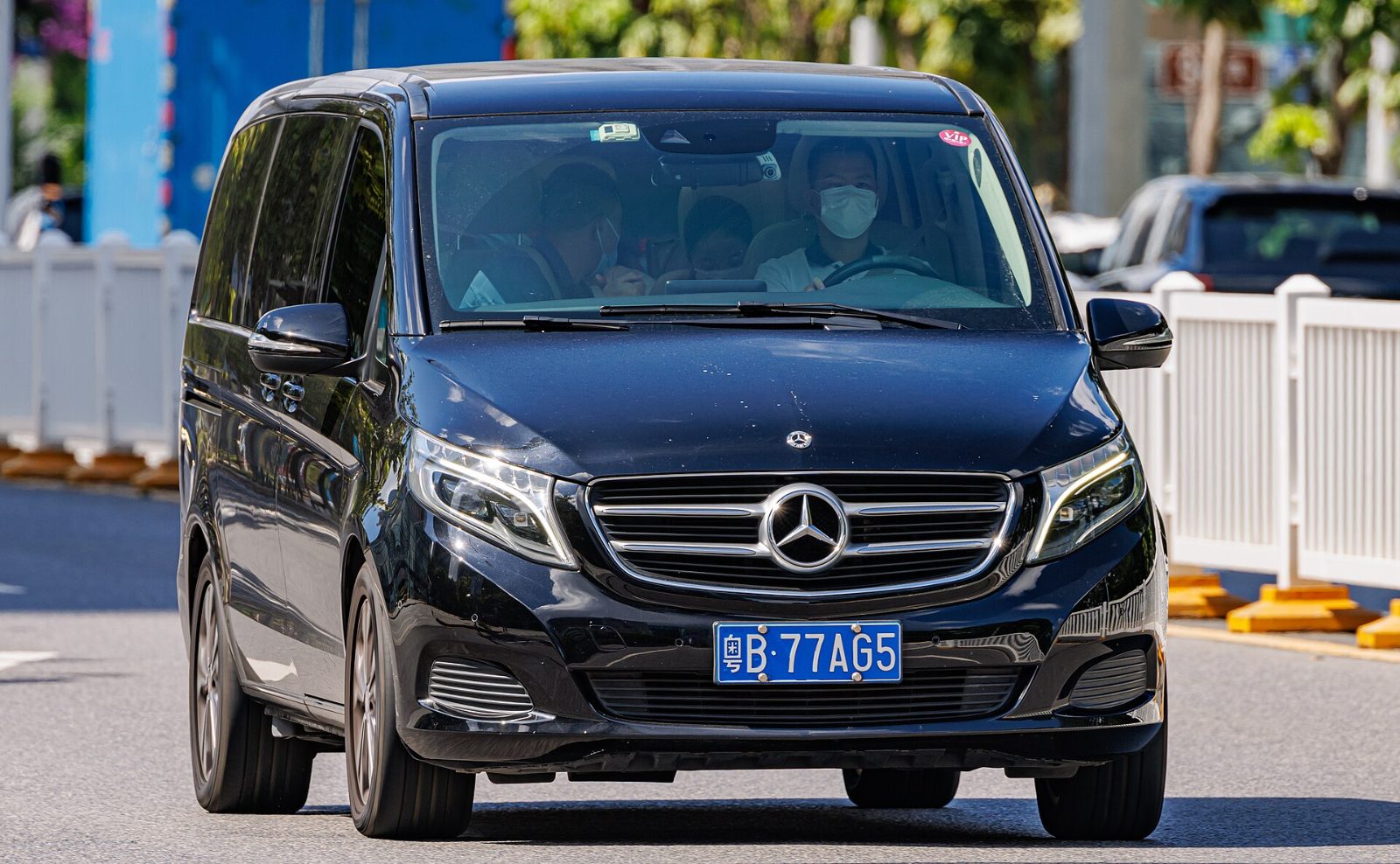
The Mercedes V-Class is a large luxury MPV, or people carrier, based on the same platform as the Vito van but fitted with car-like interiors, comfortable individual seats and premium equipment. It seats up to seven or eight people depending on configuration, comes in several body lengths and is widely used in the UAE for VIP transfers, hotel shuttles and large families. The current generation, known as W447, has been on sale since 2014 and has received several updates.
From V-Class to Viano and back
Mercedes first used the V-Class name in 1996 for a front-wheel-drive MPV. Its successor, launched in 2003, was called the Viano. In 2014 the company brought back the V-Class name for the current generation, which shares its basic structure with the Vito and the electric EQV.
| Generation | Years | Name |
|---|---|---|
| W638 | 1996 to 2003 | V-Class |
| W639 | 2003 to 2014 | Viano |
| W447 | 2014 onward | V-Class, with updates in 2019 and 2024 |
Older Vianos are still common on the used market in the Gulf and can be good value, but they lack the newer cabin technology and safety systems.
Body lengths and seating
The V-Class is offered in different lengths. Names vary by market, but the idea is the same: the longer the van, the more luggage space behind the last row of seats.
Seating is flexible. Common layouts include:
- Two front seats plus two rows of individual seats or benches, giving seven or eight places.
- Rear seats facing each other in a “conference” layout, with an optional table.
- Executive layouts with fewer, larger reclining seats for chauffeur use.
Rear seats sit on rails and can be moved, turned or removed, although they are heavy and removal is usually a two-person job.
V-Class at a glance
- Type: luxury MPV / people carrier
- Platform: shared with Vito and EQV
- Doors: sliding side doors, often electric
- Seats: up to seven or eight depending on layout
Comfort and equipment
Higher trims bring features that make the V-Class popular for executive transport:
- Electric sliding doors on both sides and an electric tailgate.
- Rear climate control, which matters a great deal in UAE summers.
- Leather upholstery and ambient lighting.
- Large touchscreen infotainment with MBUX on recent models.
- Panoramic glass roof and rear sunblinds.
- Premium audio and rear entertainment options.
Marco Polo and EQV
Two related models deserve a mention:
- Marco Polo. A camper version with pop-up roof, beds and kitchen unit in some markets. Ideal for road trips, though availability in the UAE varies.
- EQV. The fully electric version of the V-Class body. It suits urban shuttle work where charging is available.
Driving the V-Class in the UAE
- Size. It is long and tall. Check height limits in car parks and drive-throughs.
- Air conditioning. With large glass areas, a strong rear AC system is essential. Have it serviced before summer.
- Ride. Comfortable on highways, though it can feel firmer than a luxury saloon over speed bumps when lightly loaded.
- Manoeuvring. Parking sensors and a 360-degree camera are very helpful.
- Window film. Legal-limit heat-rejecting film keeps rear passengers cooler.
Business use
If the V-Class will be used commercially, for example for transfers or tourism, check licensing and registration requirements with the RTA or your emirate’s transport authority before buying.
Running costs to expect
A V-Class costs more to run than a regular family car, but less than many large luxury SUVs in some areas. Plan for:
- Servicing. Follow the service indicator and the dealer’s schedule. Vehicles used for shuttle work often count as severe use and need shorter intervals.
- Tyres. Commercial-rated tyres are used on many versions because of the vehicle’s weight. Replace them with the correct load rating, not just the right size.
- Brakes. Heavy loads and city traffic wear brakes faster than in a saloon.
- Fuel. Consumption rises with passengers, luggage and constant AC use in summer.
- Interior care. Leather, carpets and seat mechanisms take more wear when many people get in and out every day.
Safety and child seats
The V-Class offers driver assistance systems such as active brake assist, blind spot monitoring and lane-keeping support, depending on specification. For families, the individual rear seats on rails make fitting child seats easier than in many SUVs, and ISOFIX points are available on several seats. Check how many seats in the specific van have ISOFIX before buying, as layouts differ. Always fit child seats according to the seat maker’s instructions and keep children in the rear rows.
Buying a used V-Class
Many used V-Class vans in the Gulf have worked hard as hotel or VIP shuttles, so condition varies widely.
- Check the service history and how the vehicle was used.
- Confirm GCC specification and decode the VIN with our Mercedes VIN guide.
- Test both sliding doors many times; electric door mechanisms can be expensive to fix.
- Check rear AC performance on a hot day.
- Inspect seat rails, seat locks and upholstery wear.
- Look for kerb damage and scrapes on lower bodywork.
- Run a diagnostic scan for stored faults.
For a family or a business that moves people in comfort, the V-Class offers space no SUV can match.
V-Class or GLS?
The GLS is a seven-seat SUV with all-wheel drive and a more car-like driving experience. The V-Class offers far more interior space, easier access through sliding doors and more flexible seating. If you regularly carry seven adults and luggage, the V-Class usually wins. Our model line finder compares the range.
FAQ
How many seats does the Mercedes V-Class have?
Typically up to seven or eight, depending on body length and seat layout.
Is the V-Class the same as the Vito?
They share a platform, but the V-Class is the passenger-focused luxury version, while the Vito is mainly a commercial van.
Is there an electric V-Class?
Yes, the EQV is the electric version of the V-Class body.
What replaced the Viano?
The V-Class name returned in 2014 for the generation that replaced the Viano.
Sources: Mercedes-Benz Vans, Mercedes-Benz Group Media, Roads and Transport Authority
Cover photo: Dinkun Chen, CC BY-SA 4.0. Last reviewed: 2026-11-25.